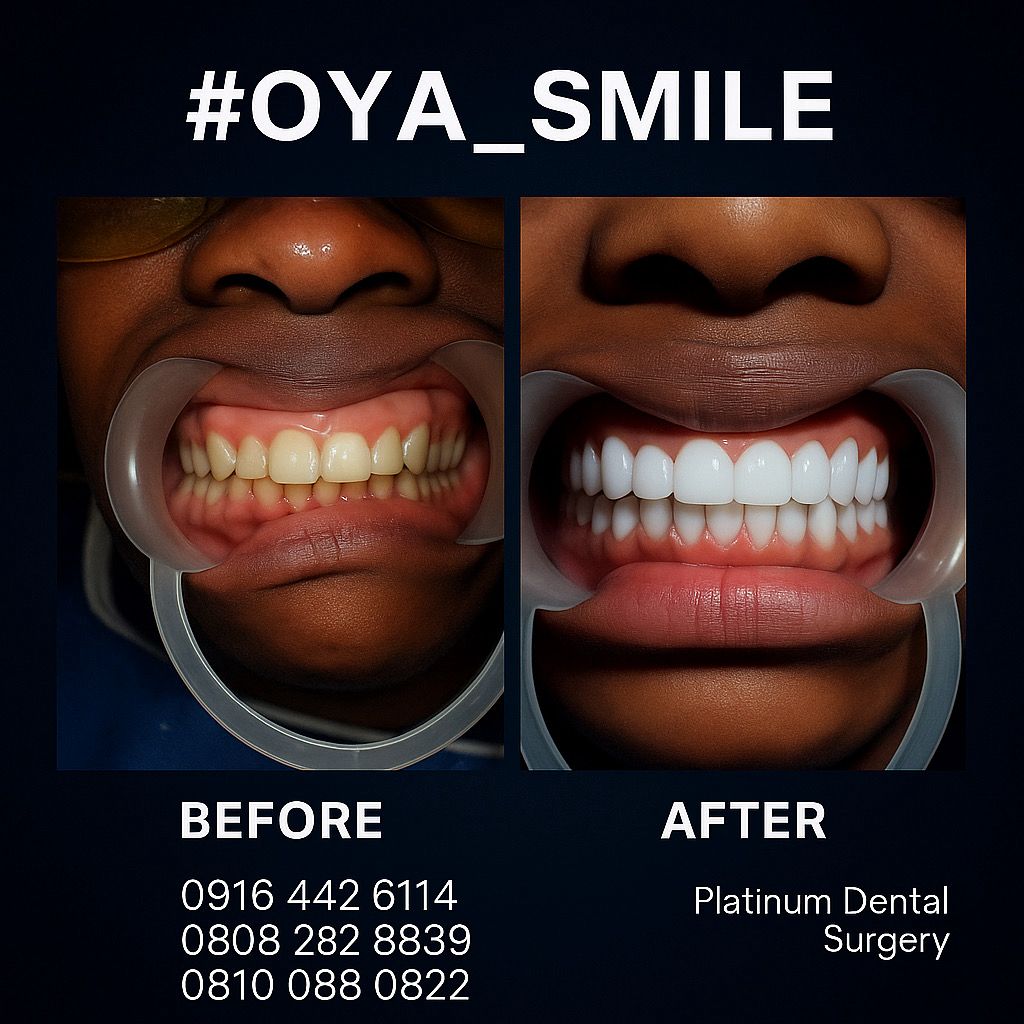
A bright, confident smile can change how you present yourself in a job interview, a first meeting, or a family photograph. In Lagos, where professional appearances and social impressions carry real weight, more residents are turning to cosmetic dental treatments to achieve the results that brushing alone cannot deliver.
Teeth whitening is one of the most requested cosmetic dental procedures in the city, and for good reason. It is non-invasive, produces visible results quickly, and when performed by a qualified dentist, it is safe and well-tolerated. Yet many patients still have questions about how it works, what it costs, and whether professional treatment is worth it compared to home remedies.
This guide answers all of those questions. It also introduces Platinum Dental Surgery, one of Lagos’ trusted providers of professional cosmetic dental treatments, with branches in Ikeja, Ikosi Ketu, and Lagos Island.
What Is Teeth Whitening?
Teeth whitening is a cosmetic dental procedure that lightens the natural colour of your teeth by removing stains and discoloration from the enamel and dentine. It does not change the structure of the tooth — it simply restores or enhances the shade of your existing teeth.
Professional whitening works by applying a peroxide-based bleaching agent directly to the tooth surface. The active ingredient — typically hydrogen peroxide or carbamide peroxide — penetrates the enamel and breaks down the chemical bonds that hold stain molecules together. The result is a noticeably lighter tooth shade, often achieved in a single appointment.
It is important to understand that teeth whitening is not the same as a routine dental cleaning. A general dental check-up and clean removes surface plaque and tartar through mechanical scaling and polishing. Whitening, by contrast, chemically alters the colour of the tooth itself and is classified as a cosmetic procedure. For best results, your dentist will typically recommend a professional clean before beginning any whitening treatment.
Common causes of tooth discoloration include food and drinks, tobacco use, ageing, poor oral hygiene, and certain medications — all of which are covered in detail in the next section.
Pro Tip: If you are considering a broader smile transformation, ask your dentist about combining teeth whitening with other smile makeover treatments in Lagos for a more complete result.
Common Causes of Tooth Discoloration
Understanding what caused your staining in the first place helps your dentist recommend the most effective whitening approach. Tooth discoloration generally falls into two categories: extrinsic stains, which form on the outer surface of the enamel, and intrinsic stains, which originate deeper within the tooth structure.
Food and Drinks
Coffee, tea, red wine, and dark soft drinks are among the most frequent culprits behind surface staining. These beverages contain chromogens — highly pigmented compounds — and tannins, which help those pigments bind to enamel. Regular consumption over months or years produces a visible yellowing or browning effect that brushing alone cannot fully reverse.
Tobacco Use
Smoking and the use of other tobacco products introduce tar and nicotine into the mouth. Tar is naturally dark, while nicotine turns yellow on contact with oxygen. Together, they create stubborn brown and yellow stains that penetrate deep into the enamel, making them among the most challenging to treat. According to Dental Association tobacco stains often require more intensive or repeated whitening sessions compared to dietary stains.
Ageing
As you age, the outer enamel layer gradually thins through normal wear. Beneath the enamel lies dentine, which is naturally more yellow. As the enamel becomes thinner, the dentine beneath shows through more clearly, giving older teeth a darker or more yellow appearance. This type of discoloration is intrinsic and may respond differently to whitening than surface stains do.
Poor Oral Hygiene
Inadequate brushing and flossing allow plaque to accumulate on the tooth surface. Over time, plaque hardens into tartar, which has a yellowish-brown colour and cannot be removed by brushing. Tartar buildup not only discolours teeth but also creates a rough surface that attracts further staining.
Certain Medications
Some antibiotics, particularly tetracycline, can cause intrinsic discoloration when taken during tooth development in childhood. Antihistamines, antihypertensives, and some chemotherapy drugs have also been associated with tooth darkening. These medication-related stains are often deeper and may not respond fully to standard whitening treatments, making a professional assessment especially important.
Benefits of Professional Teeth Whitening
Choosing professional teeth whitening over an over-the-counter product delivers advantages that go well beyond a slightly brighter result. Here is what you can realistically expect from a clinic-based treatment.
Improved Appearance
The most immediate benefit is a visibly brighter smile. Professional-grade whitening agents are significantly stronger than anything available in a pharmacy, producing results that are more uniform and more dramatic. A whiter smile improves how you photograph, how you present yourself in professional settings, and the first impression you make in any social interaction.
Increased Confidence
Many patients report a meaningful boost in self-confidence after whitening treatment. When you are not self-conscious about the colour of your teeth, you smile more freely — in conversations, presentations, and photographs. That shift in confidence can have a genuine effect on both your social life and your workplace performance, as noted by Dr Ogundeji Founder Of Platinum Dental Surgery
Fast Results
In-office whitening typically delivers visible improvement within a single appointment, which usually lasts between 60 and 90 minutes. This makes it an appealing option for patients preparing for a specific event — a wedding, a job interview, or a public appearance — where time is limited.
Safe and Controlled Treatment
When performed by a qualified dentist, teeth whitening is a well-established and safe procedure. Your gums and soft tissues are protected throughout the process, the concentration of the whitening agent is calibrated to your individual needs, and any sensitivity is monitored and managed. This level of control is simply not possible with DIY kits purchased online or from a pharmacy.
Why Professional Teeth Whitening Is Better Than Home Remedies
The market for at-home whitening products — strips, trays, charcoal powders, oil pulling kits — is large and growing. While some of these products produce modest results, they carry risks that many users do not anticipate.
Risks of DIY Methods
Over-the-counter whitening strips and ill-fitting trays can cause uneven whitening, leaving some areas of the tooth lighter than others. Ill-fitting trays allow the bleaching gel to leak onto the gums, causing irritation and chemical burns to the soft tissue. Overuse or misuse of high-concentration products can also increase tooth sensitivity to the point of pain. As Many Dentist notes, patients who attempt repeated DIY whitening without professional guidance are more likely to experience sensitivity and enamel damage over time.
Advantages of Dental Supervision
Professional whitening is customized to your specific stain type, tooth sensitivity level, and desired outcome. Your dentist uses professional-grade whitening agents that are not available to consumers, applies protective barriers to your gums before treatment begins, and monitors the process throughout. The result is a more even, more effective, and longer-lasting outcome than most home products can achieve.
At Platinum Dental Surgery, all whitening treatments are performed under the direct supervision of experienced cosmetic dentists. Every patient receives an oral health assessment before treatment begins to confirm suitability and to identify any conditions — such as cavities or gum disease — that should be addressed first. This patient-first approach ensures both your safety and the quality of your results.
Important Note: Teeth whitening is not recommended for patients with untreated cavities, active gum disease, or exposed root surfaces. A professional consultation will identify whether any preliminary treatment is needed before whitening can begin.
Types of Teeth Whitening Treatments Available
Professional teeth whitening is not a one-size-fits-all procedure. Depending on your schedule, the severity of your staining, and your budget, your dentist may recommend one of two main approaches.
In-Office Teeth Whitening
In-office whitening is the fastest and most powerful option available. During the appointment, your dentist applies a high-concentration peroxide gel directly to your teeth, often activating it with a specialized light or laser to accelerate the bleaching process. The procedure typically takes 60 to 90 minutes and can lighten teeth by several shades in a single visit.
This option suits patients who want immediate, dramatic results — particularly those preparing for an upcoming event or those with moderate to severe extrinsic staining. Because the treatment is performed entirely in the clinic under professional monitoring, it carries a lower risk of sensitivity or uneven results than home-based alternatives. We describes in-office whitening as the gold standard for patients seeking reliable, fast outcomes.
Take-Home Professional Whitening Kits
For patients who prefer a more gradual approach, dentist-prescribed take-home kits offer a flexible alternative. Your dentist takes impressions of your teeth and fabricates custom-fitted trays that fit precisely over your dental arch. You then apply a lower-concentration whitening gel to the trays and wear them for a prescribed period each day — typically one to two hours, or overnight, depending on the formula used.
Take-home kits generally require one to two weeks of consistent use to achieve full results, but they offer the advantage of allowing you to manage the process at your own pace. They are also useful for maintaining results after an in-office treatment. Because the trays are custom-made and the gel is professionally prescribed, this approach is significantly safer and more effective than generic over-the-counter whitening trays.
What to Expect During a Teeth Whitening Appointment
If you have never had a professional whitening treatment before, knowing what happens at each stage of the appointment can help you feel prepared and comfortable.
Initial Consultation
Your appointment begins with a thorough oral examination. Your dentist will assess the health of your teeth and gums, identify the type and severity of your staining, and determine whether you are a suitable candidate for whitening. If any underlying issues — such as a cavity or early-stage gum disease — are detected, your dentist will recommend addressing these before proceeding with cosmetic treatment. This step protects both your oral health and the quality of your whitening result.
Whitening Procedure
Once your suitability is confirmed, the whitening procedure begins with a professional clean to remove any surface plaque or debris that could interfere with the gel’s penetration. Your dentist then places a protective barrier — typically a rubber dam or a protective gel — over your gums to shield them from the bleaching agent.
The whitening gel is applied evenly across the front surfaces of your teeth. Depending on the system used, a light or laser may be directed at the gel to accelerate the chemical reaction. The gel is typically left in place for 15 to 20 minutes before being removed and reapplied, with the process repeated two to three times within the same appointment. Your dentist monitors your comfort and the progress of the treatment throughout.
Aftercare
In the 24 to 48 hours immediately following your treatment, your teeth are more porous and therefore more susceptible to re-staining. Your dentist will advise you to avoid dark-coloured foods and drinks — coffee, tea, red wine, tomato-based sauces, and dark berries — during this window. Smoking should also be avoided. Maintaining a consistent oral hygiene routine — brushing twice daily with a fluoride toothpaste and flossing once a day — is the single most effective way to preserve your results long-term. Your dentist may also schedule a follow-up visit to assess the outcome and discuss maintenance options.
How Long Do Teeth Whitening Results Last?
Professional teeth whitening results are not permanent, but with the right habits, they can last considerably longer than most patients expect. Most patients maintain their results for six months to two years before a top-up treatment becomes necessary.
The longevity of your results depends on several factors. Diet plays the most significant role — regular consumption of coffee, tea, red wine, and dark-coloured foods will gradually re-stain the enamel. Smoking accelerates staining more than almost any other habit and will shorten the lifespan of your whitening results considerably. Your general oral hygiene routine also matters: consistent brushing and flossing reduce plaque accumulation and slow the return of surface stains.
Age and the natural porosity of your enamel also affect how long results last, as does the initial severity of your staining. Patients with mild extrinsic staining typically maintain results longer than those who began treatment with heavy tobacco or dietary staining.
To keep your smile at its brightest, consider the following maintenance strategies:
- Use a whitening toothpaste once or twice a week to manage surface stains between professional treatments
- Rinse your mouth with water immediately after consuming staining beverages
- Drink coffee and tea through a straw to reduce direct contact with your teeth
- Schedule a professional clean every six months to remove plaque and surface buildup
- Ask your dentist about periodic top-up sessions using your custom take-home trays
Teeth Whitening Cost in Lagos
The cost of professional teeth whitening in Lagos varies depending on a number of factors, and understanding these variables will help you plan your treatment realistically.
The severity of your staining is one of the most significant cost drivers. Mild surface stains may be addressed in a single session, while heavy or deep-set staining — particularly tobacco-related discoloration — may require multiple appointments or a combination of in-office and take-home treatment.
The whitening method itself also affects pricing. In-office laser or light-activated whitening is generally priced higher than take-home kit systems because it requires more clinical time, specialist equipment, and professional-grade materials. The experience and qualifications of the dental team, as well as the location and standard of the clinic, are also reflected in the final cost.
Rather than publishing a fixed price that may not reflect your specific needs, Platinum Dental Surgery encourages patients to schedule a consultation for a personalized assessment and treatment plan. This ensures that the recommended approach — and its associated cost — is matched precisely to your oral health status, your staining type, and your desired outcome.
Pro Tip: When comparing costs across clinics, consider the full picture — the qualifications of the dental team, the quality of the whitening system used, and what is included in the quoted price (consultation, aftercare, follow-up). The lowest price does not always represent the best value.
Who Is a Good Candidate for Teeth Whitening?
Teeth whitening delivers the best results for a specific group of patients. Understanding whether you fall within that group before booking your appointment will help you set realistic expectations and avoid unnecessary expense.
You are likely a good candidate for professional whitening if you have generally healthy teeth and gums with no untreated decay or active gum disease, if your discoloration is primarily extrinsic — that is, caused by food, drinks, or tobacco — and if you are an adult seeking a cosmetic enhancement to your natural smile. Patients in this category typically respond well to peroxide-based whitening and can expect a meaningful improvement in tooth shade.
However, whitening is not the right solution for every type of discoloration. Teeth that have been restored with crowns, veneers, or tooth-coloured fillings will not respond to bleaching agents — only natural tooth enamel whitens. If you have significant restorations on your front teeth, whitening the surrounding natural teeth could create a visible mismatch. Similarly, intrinsic staining caused by tetracycline antibiotics, fluorosis, or tooth trauma often does not respond adequately to whitening and may be better addressed through cosmetic options such as veneers or composite bonding.
A professional consultation is the most reliable way to determine which treatment is right for you. Your dentist will examine your teeth, discuss your goals, and recommend the approach most likely to deliver the result you are looking for — whether that is whitening, an alternative cosmetic procedure, or a combination of both.
Why Choose Platinum Dental Surgery for Teeth Whitening in Lagos?
With a growing number of dental clinics offering whitening services across Lagos, choosing the right provider matters. Platinum Dental Surgery has built its reputation on clinical expertise, patient-centred care, and consistent results across its three Lagos locations.
Experienced Dental Team
All whitening treatments at Platinum Dental Surgery are carried out by skilled cosmetic dentists with hands-on experience managing a wide range of stain types and patient needs. The team’s expertise means your treatment plan is based on a thorough clinical assessment rather than a one-size-fits-all approach. Patients with sensitivity concerns, complex staining histories, or existing dental restorations receive tailored guidance before any whitening agent is applied.
Multiple Convenient Locations
Platinum Dental Surgery operates three branches across Lagos, making it accessible to patients across the city.
Ikeja Branch
107A Opebi Road, Opebi, Ikeja, Lagos
Ikosi Ketu Branch
106 Aladelola Street, Ikosi Ketu, Lagos
Lagos Island Branch
183 Massey Bamgboshe Street, Lagos Island, Lagos
Modern Dental Technology
The clinic uses advanced professional whitening systems that are not available over the counter, combined with a comfortable and well-equipped treatment environment. Modern whitening technology allows for more precise gel application, better light activation where used, and more predictable shade outcomes compared to older systems. Patients consistently report a comfortable experience with minimal post-treatment sensitivity.
Patient-Centered Care
Every patient at Platinum Dental Surgery begins with a comprehensive oral health assessment before any cosmetic treatment proceeds. Treatment plans are personalized to each patient’s clinical profile, lifestyle, and aesthetic goals. The team takes time to explain the procedure, set realistic expectations, and provide clear aftercare guidance — so you leave each appointment knowing exactly how to protect and maintain your results. For patients interested in broader cosmetic improvements, the clinic also offers a full range of smile makeover services in Lagos that can be combined with whitening for a more complete transformation.
Frequently Asked Questions
Is Teeth Whitening Safe?
Yes, when performed by a qualified dentist, professional teeth whitening is a safe and well-established cosmetic procedure. The whitening agents used are approved for dental use, your gums are protected throughout the process, and the concentration of the bleaching gel is calibrated to your individual needs. Risks increase significantly with unregulated or unsupervised DIY products, which is why professional treatment is strongly recommended.
Does Teeth Whitening Damage Enamel?
Professional teeth whitening, when carried out correctly and at appropriate intervals, does not damage enamel. The peroxide-based agents used in clinic temporarily open the enamel’s pores to allow stain removal, but the enamel remineralizes naturally after treatment. Overuse of high-concentration products without professional guidance — a common risk with DIY kits — is more likely to cause enamel sensitivity or surface changes over time.
How Many Shades Whiter Can My Teeth Become?
Results vary depending on the initial shade of your teeth, the type and depth of your staining, and the whitening system used. Most patients achieve a noticeable improvement of several shades after a single in-office session. Patients with mild to moderate extrinsic staining typically see the most dramatic results. Your dentist will give you a realistic assessment of what to expect based on your specific starting point.
How Long Does the Procedure Take?
An in-office whitening appointment typically takes between 60 and 90 minutes from start to finish, including preparation, the whitening process itself, and a post-treatment review. Take-home kit programmes require daily application over one to two weeks, with each session lasting between 30 minutes and two hours depending on the prescribed formula.
Will Teeth Whitening Cause Sensitivity?
Some patients experience mild tooth sensitivity or gum tenderness in the 24 to 48 hours following a whitening treatment. This is a normal and temporary response to the bleaching agent and typically resolves on its own within a day or two. Your dentist may recommend a desensitizing toothpaste or gel before or after treatment if you have a history of sensitivity. Patients with pre-existing sensitivity should discuss this with their dentist before proceeding.
How Often Can I Whiten My Teeth?
Most dental professionals recommend waiting at least six to twelve months between full whitening treatments to allow the enamel to remineralize fully and to avoid overexposure to bleaching agents. Periodic top-up sessions using a take-home tray — typically a shorter application over a few days — can be used to maintain results between full treatments. Your dentist at Platinum Dental Surgery will advise on the appropriate frequency based on your individual response to treatment and your lifestyle habits.
Is Professional Whitening Better Than Whitening Toothpaste?
Whitening toothpastes work by using mild abrasives or low-concentration chemical agents to remove surface stains through daily brushing. They can help maintain results after professional treatment and slow the return of light surface staining, but they are not strong enough to produce the shade changes that a professional bleaching agent delivers. For patients with noticeable discoloration, professional whitening is the more effective starting point, with whitening toothpaste used as part of an ongoing maintenance routine.
Conclusion
Professional teeth whitening is one of the most effective and accessible cosmetic dental treatments available in Lagos today. Whether your discoloration comes from years of coffee and tea, tobacco use, natural ageing, or medication, a clinic-based whitening treatment offers a safe, fast, and reliable path to a noticeably brighter smile — results that over-the-counter products simply cannot match.
The key is choosing the right provider. A qualified dentist will assess your oral health before treatment begins, select the whitening system best suited to your staining type, protect your gums throughout the procedure, and give you clear guidance on how to maintain your results. That combination of expertise and personalized care is what separates professional treatment from anything you can buy in a pharmacy.
If you are ready to achieve a brighter, more confident smile, Platinum Dental Surgery is here to help. With experienced cosmetic dentists, modern whitening technology, and three convenient locations across Lagos, the clinic offers professional teeth whitening solutions tailored to your individual needs.
Book your consultation today and take the first step toward the smile you want.
- Ikeja: 107A Opebi Road, Opebi, Ikeja, Lagos
- Ikosi Ketu: 106 Aladelola Street, Ikosi Ketu, Lagos
- Lagos Island: 183 Massey Bamgboshe Street, Lagos Island, Lagos
Phone: 08082228889 | 08100880822 | 09164426114
Website: www.platinumdental.com.ng

